
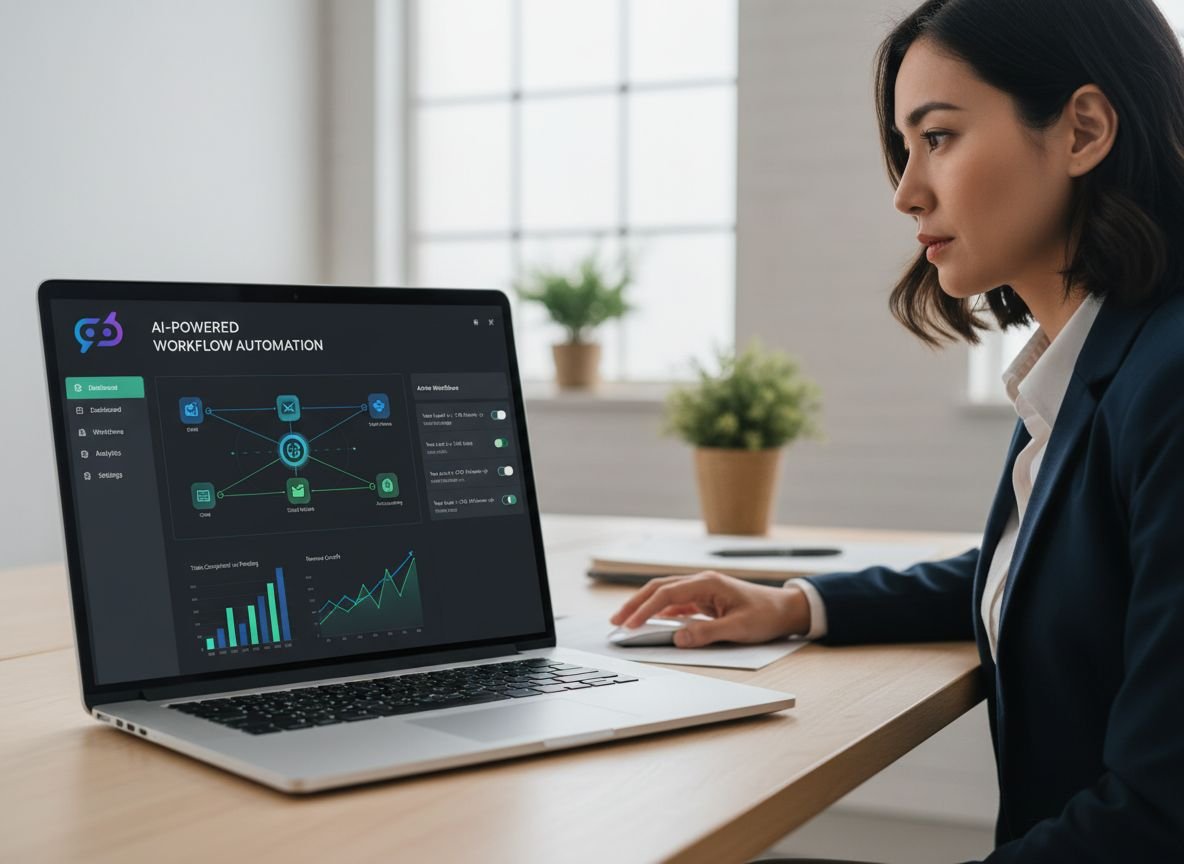
Searches for “Droven IO AI automation in USA” can create an expectation that Droven.io is an automation platform or a company selling workflow software. The available site description presents Droven.io as an informational and educational publication covering artificial intelligence, robotic process automation, digital transformation, and emerging technology. That distinction matters: a publication explaining automation is not the same as a vendor that installs or operates automation systems for customers.
This guide clarifies how to interpret Droven IO, explains the main types of business automation used in the United States, and provides a practical framework for evaluating tools, providers, costs, security, and expected results. The goal is to help readers distinguish useful automation from marketing claims that promise more than a system can reliably deliver.
What is Droven IO?
The public “About” description associated with Droven.io characterizes the site as a free-to-read learning resource that explains AI, robotic process automation (RPA), and future technology in accessible language. It describes the audience as students, small-business owners, and readers who want to understand technical subjects without needing an engineering background. Its description says it is an informational platform rather than a software vendor, agency, or recruitment portal.
That means a reader should treat Droven.io primarily as an editorial or educational resource unless a specific product, service agreement, or business registration can be independently verified. Before paying for any service advertised under a similar name, confirm the exact legal entity, official domain, contact details, deliverables, data-processing terms, and support responsibilities. Similar brand names can refer to different organizations.
The site’s About description of Droven.io is useful for understanding how it presents itself. It should not be treated as proof that it supplies a particular AI platform or implementation service.
What does AI automation mean for a U.S. business?
AI automation combines software workflows with machine-learning or language-model capabilities. Traditional automation follows rules: if an invoice arrives in a specific format, the system routes it to the correct folder. AI-assisted automation can interpret less structured information, such as extracting fields from a document, classifying a customer message, summarizing a call, or drafting a response for human approval.
Common use cases include lead routing, customer-support triage, appointment reminders, document extraction, invoice processing, internal knowledge search, reporting, quality checks, and sales administration. Not every task needs AI. If a process is stable and rule-based, a conventional workflow tool may be cheaper, faster, and easier to audit.
Where U.S. businesses commonly apply automation
Customer service and lead management
An automated system can classify incoming enquiries, suggest responses, route urgent requests, and create records in a customer relationship management system. A human should remain involved when a request concerns refunds, legal threats, financial hardship, safety, or a sensitive complaint. A fast answer is not necessarily a correct answer.
Document and back-office processing
AI can extract names, dates, totals, and reference numbers from invoices, purchase orders, applications, and forms. The process should validate totals and required fields against source documents before writing data into an accounting or enterprise system. For financial records, keep an audit trail showing the original file, extracted values, corrections, and approval.
Marketing and content operations
Automation can help with topic clustering, draft outlines, metadata, content repurposing, and scheduling. It should not replace factual research, editorial review, or legal checks. A workflow that produces many pages quickly can also scale errors, duplication, and misleading claims if it lacks controls.
Internal knowledge and reporting
Search and summarization systems can help employees find information across policies, manuals, and approved documents. They should identify source material and make clear when the answer is uncertain. Access permissions must follow the original documents so that a search assistant does not expose information to employees who could not otherwise view it.
How to evaluate an AI automation provider
Start with a narrow process and a measurable problem. Ask the provider to describe what the system will do, what data it needs, which software it connects to, and what happens when it cannot complete a task. A credible proposal should explain implementation, testing, monitoring, maintenance, support, and exit arrangements—not just list model names.
- Scope: Identify the exact workflow, its current steps, exceptions, and expected outcome.
- Data: Determine what customer, employee, financial, or confidential information will be processed.
- Access: Ask whether the vendor can use least-privilege access and role-based permissions.
- Accuracy: Test with real examples, including unusual and incomplete records.
- Human review: Define which outputs require approval before a message is sent or a record is changed.
- Ownership: Clarify who owns prompts, configuration, workflow logic, logs, and generated materials.
- Exit plan: Confirm how data and workflow records can be exported if the relationship ends.
Security, privacy, and governance
Automation can involve personal data, payment information, health-related details, employee records, or trade secrets. A U.S. company should understand what the software stores, where it is processed, how long it is retained, which subcontractors can access it, and whether submitted data may be used to train shared models. Contract terms should describe breach notification, data deletion, access controls, and responsibilities for regulatory compliance.
The NIST AI Risk Management Framework offers a voluntary structure for identifying and managing AI risks across governance, context mapping, measurement, and ongoing management. For consumer-facing uses, businesses should also review the FTC’s business guidance on privacy and data security. These resources do not replace legal advice, but they provide a disciplined starting point.
How to calculate the business case
Estimate current labour time, error rates, rework, queue time, and customer impact. Then estimate the total cost of automation: software subscription, usage charges, integration, training, monitoring, security review, and support. Compare the expected net benefit with the total cost over a realistic period. A system that saves ten minutes per task may not be worthwhile if only a handful of tasks occur each month.
Measure more than speed. Track completion rate, error rate, human correction time, customer satisfaction, exception volume, and the number of tasks that still require manual intervention. A good pilot defines success in advance and includes a rollback plan if the automation performs poorly.
A practical pilot plan
- Choose one high-volume, low-risk workflow.
- Map the process and record baseline time and error rates.
- Remove unnecessary steps before automating them.
- Test the workflow with representative and edge-case data.
- Keep a human approval step for consequential decisions.
- Run a limited pilot and compare results with the baseline.
- Expand only after the data shows reliable performance.
For related operational topics, see the site’s Technology coverage, Business articles, and our practical guide to the Innovera 15927 office calculator as an example of choosing simple tools for straightforward work.
Frequently asked questions
Is Droven.io an AI automation software platform?
The available public description presents Droven.io as an educational and informational website, not a software vendor. Verify any separate product or service using its exact legal and commercial details.
Does every business need AI automation?
No. Some tasks are better handled by ordinary rules-based software, templates, or improved procedures. AI is most useful when the workflow involves language, classification, variable documents, or other tasks that are difficult to capture with fixed rules.
Can AI automation run without human oversight?
Some low-risk, repetitive tasks can be automated end to end, but important customer, financial, employment, legal, or safety decisions generally require review and clear accountability.
How long does implementation take?
It depends on data quality, integration complexity, workflow exceptions, and approval requirements. A narrow pilot can be much faster than a company-wide automation programme.
When automation is not the right answer
Automation is not automatically beneficial because a process is repetitive. If a task happens only a few times a month, the cost of building and maintaining a workflow may exceed the time saved. If a process is poorly designed, automating it can make a bad process run faster without fixing its underlying problem. Start by simplifying forms, removing duplicate approvals, and agreeing on a consistent data format. Then decide whether rule-based automation or AI is needed.
Keep people responsible for decisions that require judgment, empathy, legal interpretation, or an understanding of unusual circumstances. A system can draft a customer response, but staff should approve sensitive replies. It can extract figures from invoices, but a person should investigate mismatched totals, suspicious payment instructions, or unusual vendors. It can rank leads, but a business should check whether the data or scoring method creates unfair outcomes.
Red flags in automation proposals
Be cautious when a provider promises perfect accuracy, guaranteed savings without a baseline, or a fully autonomous process without explaining exceptions. Ask for a demonstration using your own sample data, a list of supported integrations, and a clear description of what happens when a model is uncertain. A credible supplier should explain system limitations, data retention, incident response, and how your team can switch the workflow off. Request an itemized estimate for setup, subscription, model usage, integration, maintenance, and training.
Before signing, document the acceptance criteria. For example, define the percentage of records that must be processed correctly, the time allowed for human review, and how errors will be measured. Also decide who owns the final decision when the system’s output conflicts with a source document or customer statement. These details turn a technology experiment into a manageable business project.
Conclusion
Droven IO is best understood from its public description as a resource for learning about AI and automation, not as proof of a specific U.S. automation service. Businesses evaluating AI should define a measurable use case, test the system with real data, review privacy and security controls, and maintain human oversight for consequential decisions. Start small, measure the outcome, and scale only when the workflow is demonstrably reliable.
