
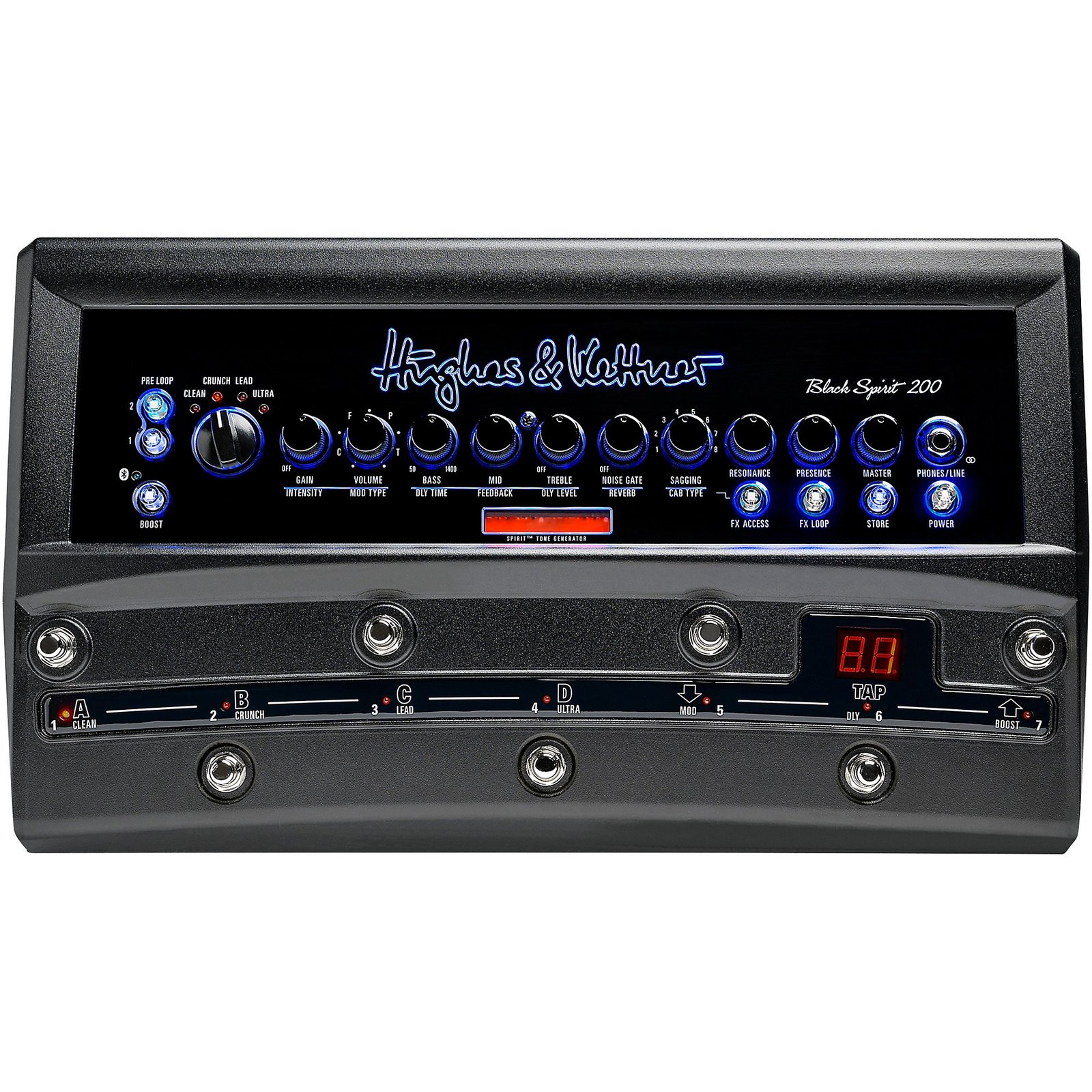
The product commonly searched as the “Hughes & Kettner Spirit 200 floor amp” is the Black Spirit 200 Floor, a floor-format guitar amplifier designed to combine a powerful amp section with extensive switching and control features. It brings together the Black Spirit 200’s sound architecture and 200-watt power amp with a controller-style layout, programmable presets, built-in effects, and direct-output options.
It is aimed at guitarists who want a flexible rig for rehearsals, live performance, and recording without carrying a conventional amplifier head and separate controller board. This guide explains the main features, what the specifications mean in practical use, how to connect the unit safely, and what to check when buying new or used.
What is the Black Spirit 200 Floor?
The Black Spirit 200 Floor is a floor-based amplifier rather than a standard stompbox effect. It has a built-in 200-watt power amplifier and can drive a compatible speaker cabinet, while its preamp and effects controls provide several tonal options. The manufacturer describes its Spirit tone-generator circuitry as an analog approach to producing the response and dynamics guitarists associate with traditional tube amplifiers.
The floor format integrates switching and control features that would otherwise require additional equipment. That makes it useful for players who want direct access to channels and presets from the stage. It is still important to understand that the unit must be paired with an appropriate speaker or monitoring setup; the power rating does not mean it can be connected to any speaker without checking impedance and power handling.
Main features and controls
Four analog channels
The manufacturer lists Clean, Crunch, Lead, and Ultra channels. These provide four broad foundations for different playing styles, from clean accompaniment and edge-of-breakup rhythm to higher-gain lead sounds. Each channel offers its own response and controls, while programmable settings allow players to store and recall preferred tones.
200-watt power amplifier
The built-in power section is rated at 200 watts. The official technical data also lists power-output or power-soak settings of 200, 20, 2, and 0 watts. This gives the player options for using a cabinet at different output levels or working in a direct-output/recording context. Actual sound pressure depends on speaker sensitivity, cabinet configuration, room acoustics, and the selected output setting.
Built-in effects and FX loop
Onboard reverb, delay, and modulation effects—including chorus, phaser, flanger, and tremolo—reduce the need for a separate effects chain for common sounds. The unit also has a serial effects loop for external time-based or other processors. The product includes two additional true-bypass pre-loops, allowing selected pedals to be placed before the preamp section. The correct connection order depends on the effects and the sound you want.
Programmable presets and Direct 7
The manufacturer lists direct access to 128 presets and a Direct 7 mode for quick recall of favourite sounds. A player can prepare clean, rhythm, lead, and ambient settings before a performance instead of changing every control manually between songs. A practical setup should label presets clearly and test volume differences before using them on stage.
Red Box AE+ direct output
The integrated Red Box AE+ DI output includes eight cabinet simulations, allowing a direct signal to be sent to a recording interface or front-of-house system. Cabinet emulation is useful when a microphone is not practical, but it does not remove the need to understand gain staging, monitoring, and the venue’s input requirements. The manufacturer also describes Bluetooth remote control and preset management through its app.
Connections and compatibility
Hughes & Kettner lists a speaker output for 8–16 ohm loads and a balanced XLR direct output. The unit also provides MIDI connections, control inputs for optional footswitches and expression pedals, an auxiliary input, a headphone/line jack, a serial effects loop, two pre-loops, and a dedicated XLR monitor input. These options make it adaptable, but they also mean buyers should check the exact manual rather than relying on assumptions about a familiar guitar amp layout.
Before connecting a cabinet, confirm its nominal impedance and power-handling capacity. Do not power the amplifier into an incompatible load or change speaker connections while the equipment is operating unless the manual explicitly allows it. Use suitable cables for speaker outputs; an instrument cable is not a substitute for a speaker cable.
Who might benefit from this amp?
Gigging guitarists may value the integrated switching and direct output, especially when they move between different venues. Home players may appreciate the ability to store tones and use lower output settings, headphones, or a direct recording path. Studio users may find the cabinet simulations useful for capturing a consistent signal. Players who already own a preferred preamp, power amp, or modelling ecosystem should compare the Black Spirit’s analog approach and control layout with their existing rig before purchasing.
What to check before buying used
- Verify the exact model is the Black Spirit 200 Floor, not the Black Spirit 200 Head or Combo.
- Test every channel, preset switch, rotary control, display, and footswitch function.
- Check speaker output, XLR DI, MIDI, monitor input, effects loop, and auxiliary connections.
- Confirm the power supply and mains lead are correct and undamaged.
- Inspect the metal housing, footswitches, knobs, and jacks for impact damage or loose fittings.
- Ask whether the original manual, packaging, and accessories are included.
- Confirm app compatibility and current support information with the manufacturer rather than relying on old device lists.
The official Black Spirit 200 Floor page provides the manufacturer’s features and technical data. For an independent view of how the amp performs in practice, read the MusicRadar review and the Guitar.com product introduction.
For more gear and industry context, explore our Entertainment guides, Technology coverage, Business resources, and artist and industry profiles.
Frequently asked questions
Is the Spirit 200 Floor a 200-watt amplifier?
Yes. The Black Spirit 200 Floor includes a 200-watt power amplifier according to the manufacturer. It also lists lower output or power-soak settings.
Does it have built-in effects?
Yes. The manufacturer lists reverb, delay, and modulation effects including chorus, phaser, flanger, and tremolo.
Can it connect directly to a PA system?
It has a balanced XLR Red Box AE+ DI output with cabinet simulations. The venue or sound engineer should still confirm the connection and gain settings.
Is it the same as the Black Spirit 200 Head?
No. It shares core sound and power features but uses a floor-based format with integrated switching and additional floor-unit connections.
Building a stage or rehearsal setup
Before rehearsal, decide whether the unit will drive a guitar cabinet, feed a PA directly, or provide a signal to a recording system. If using a cabinet, verify its impedance and power handling against the amplifier’s output and the manufacturer’s instructions. If using the Red Box output, coordinate with the sound engineer about input level, cabinet simulation, and monitoring. A direct signal can simplify stage volume, but the player still needs a reliable monitor mix to hear the instrument clearly.
Create a small set of dependable presets before programming dozens of variations. Set a clean base tone, a rhythm tone, a lead sound, and any special effect required by the set list. Match perceived volume across presets, not just the number on the display. Check the settings at rehearsal volume because a tone that sounds balanced at low volume may become harsh or overpowering in a loud room. Save a backup of important presets where the app or system permits it.
Home recording and quiet practice
The power-soak settings, headphone or line connection, and cabinet-simulated direct output can help adapt the unit to different environments. A home recording setup still needs sensible gain staging: avoid clipping the interface input, keep monitoring at a safe level, and compare the direct sound with the tone you hear through a real cabinet. If an external effects processor is used, test it in the serial loop and in the pre-loops to understand how placement changes the result.
Firmware, app compatibility, and device support can change over time. Check the current manufacturer’s downloads and manual before planning a workflow around a particular phone, tablet, or computer. A used amplifier should be tested with the accessories you intend to use, not simply powered on for a few seconds at the seller’s home.
Questions to ask a seller
When buying from a shop, ask whether the item is new, open-box, demo, or refurbished and whether the warranty follows the unit or the original purchaser. For a private sale, request a video showing the unit powering on, changing channels, switching presets, and producing sound through a compatible cabinet. Ask whether the seller has tested the balanced output and effects loop, because a basic power-on demonstration may not reveal a fault in a secondary connection. If you intend to use the amplifier for regular performances, consider the cost and availability of service in your area before making the purchase.
Also compare the physical footprint with your pedalboard and transport case. The floor format can reduce the number of separate pieces in a rig, but it still needs protection from impact, liquids, and loose cables. A tidy cable layout and a simple backup preset can reduce setup time and make troubleshooting easier when you arrive at a venue.
Conclusion
The Hughes & Kettner Black Spirit 200 Floor combines four analog channels, a 200-watt power amp, onboard effects, programmable presets, two pre-loops, a monitor input, and a cabinet-simulated direct output. Its strength is the way these elements come together in one floor unit. Before buying, confirm compatibility with your cabinet and stage setup, test the controls, and review the official manual so the amplifier is connected and configured correctly.
