
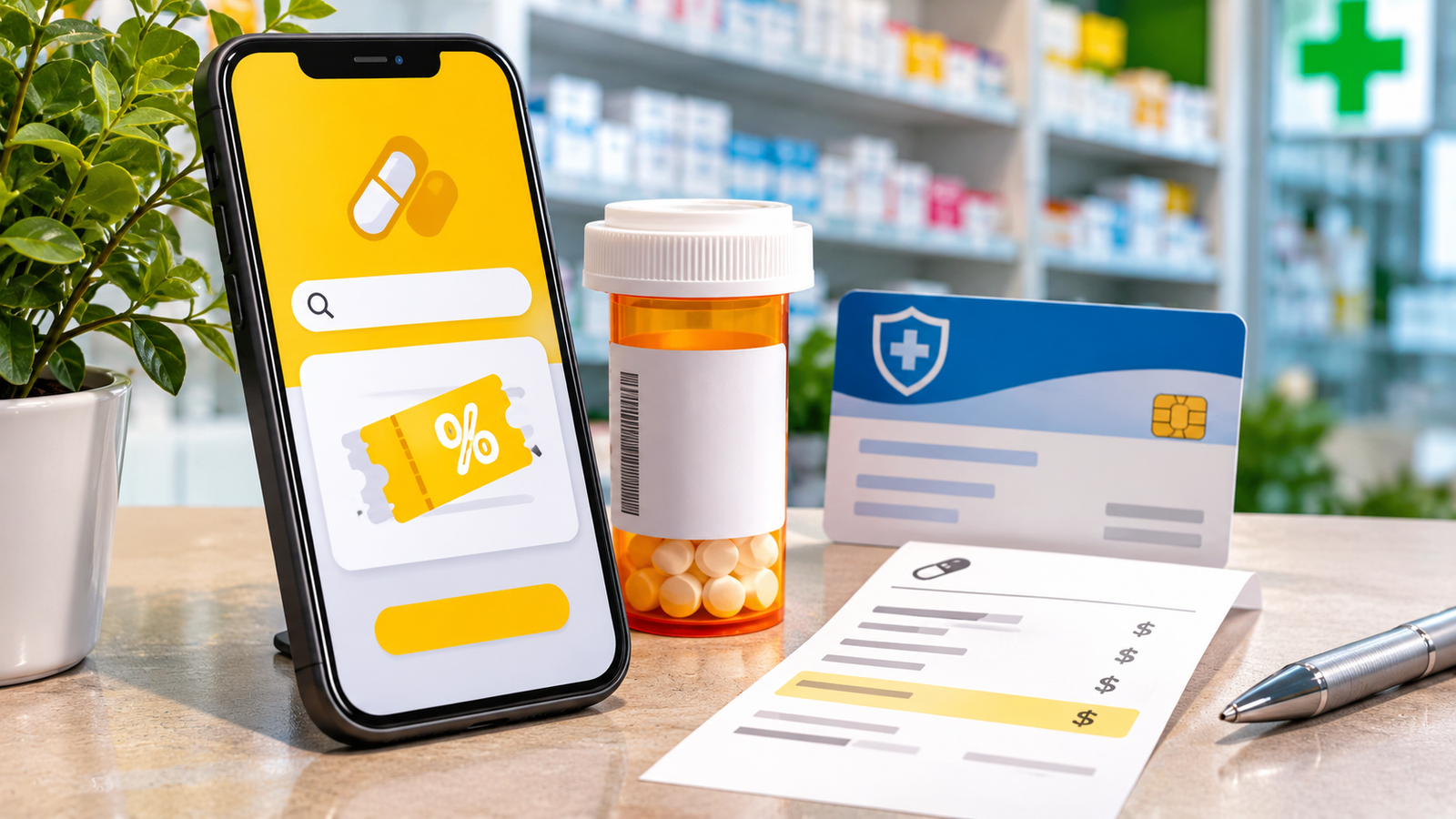
Having health insurance does not automatically mean it offers the lowest price for every prescription. A pharmacy discount such as GoodRx may show a lower cash price than an insurance copay, especially when a medicine is not covered, sits on a high formulary tier, or is subject to a deductible. The important distinction is that a GoodRx coupon is generally used instead of the insurance claim for that fill, not stacked on top of it.
This guide explains how to compare both options, when a discount may be useful, what can happen to your deductible and out-of-pocket tracking, and how Medicare beneficiaries should approach the choice. Prices and plan rules vary, so use the final amount quoted by your pharmacist and confirm benefit details with your insurer.
Can you use GoodRx with insurance?
You can have health insurance and still use GoodRx discounts, but a standard GoodRx coupon and an insurance claim generally cannot be applied to the same prescription transaction at the same time. The pharmacy processes the fill through one pricing route: either the insurance benefit or the discount program. GoodRx explains that insured customers can compare the coupon price with their copay and ask the pharmacist to process the lower eligible option as a cash-discount transaction.
This is different from a manufacturer copay card. Some manufacturer savings programs are designed to work alongside commercial insurance, subject to their own eligibility conditions. Pharmacy discount cards operate differently. Always read the particular program’s rules rather than assuming every coupon works the same way.
Why a discount price may beat your insurance copay
Insurance pricing is determined by your plan’s formulary, pharmacy network, deductible, copay or coinsurance structure, and negotiated arrangements. A plan may cover a medicine but still leave you with a relatively high amount to pay. Alternatively, a drug may be excluded from the formulary or require prior authorization. In those situations, the insurer’s price may not be the most economical option for that specific fill.
A coupon price can also be attractive for a low-cost generic. A plan may have a fixed copay that is higher than a pharmacy’s discount price. However, the reverse is also common: a preferred generic may have a low copay, while the coupon price is higher. Compare the exact drug, strength, dosage form, quantity, and pharmacy. A price for a 30-day supply is not directly comparable with a quote for a 90-day supply.
How to compare insurance and GoodRx correctly
- Confirm the prescription details. Check the drug name, strength, form, quantity, and refill date. A different package size or generic manufacturer can change the quote.
- Ask the pharmacy to check your insurance price. This establishes the amount your plan will charge at that pharmacy.
- Look up a current coupon price. Compare pharmacies in your area and select the coupon that matches the exact prescription and location.
- Ask the pharmacist to compare the two routes. Request the final out-of-pocket amount for insurance and for the discount. Do not assume the online estimate is the guaranteed checkout price.
- Consider the long-term effect. Ask whether paying cash could affect your deductible or annual out-of-pocket progress.
For a helpful background explanation, read GoodRx’s guidance for people who already have insurance. It explains why the plan copay is not always the least expensive option and why the pharmacist must process the coupon instead of the insurance claim.
Does a GoodRx purchase count toward your deductible?
Do not assume it will. A prescription purchased using a third-party discount is usually processed outside the health plan. As a result, the amount may not appear as an insurance-paid claim and may not automatically count toward your deductible or plan out-of-pocket maximum. The exact treatment can depend on your plan and the applicable benefit rules, so ask your insurer before choosing a discount solely because it is cheaper today.
This distinction matters most when you are close to meeting a deductible. Paying a little more through the insurance benefit could contribute to your plan’s cost-sharing progress, while a lower coupon price might not. Compare the current savings with the value of accumulating eligible plan spending. Ask the insurer how the prescription will be recorded and keep the pharmacy receipt.
Can Medicare beneficiaries use GoodRx?
Medicare beneficiaries can generally use eligible GoodRx discounts instead of Medicare Part D or Medicare Advantage prescription coverage for a particular purchase, but they cannot combine the coupon and the Medicare drug benefit on the same transaction. GoodRx’s support guidance says the pharmacy must process the discount without billing the Medicare plan for that fill. Some brand-name discounts may have separate eligibility restrictions.
Before choosing a discount, consider whether the medicine is covered by your Part D plan, whether it is in a preferred tier, and how the transaction affects your plan’s spending records. The official Medicare Part D drug coverage information explains the role of formularies, plan costs, and coverage rules. If the drug is expensive or you are uncertain how a cash purchase will be treated, contact your plan or pharmacist.
What to ask your pharmacist
- What is my final price if you process this prescription through my insurance?
- What is the current GoodRx price for the same drug, strength, quantity, and pharmacy?
- Will the discount require the prescription to be processed as cash instead of insurance?
- Will the cash purchase count toward my deductible or plan out-of-pocket total?
- Is there a generic, preferred alternative, or different quantity that my prescriber could consider?
Do not change a prescribed medication, dose, or refill schedule simply to obtain a lower price. Ask the prescriber whether a clinically appropriate alternative is available. Your pharmacist can also help identify whether a generic equivalent is suitable and whether the coupon matches the exact product being dispensed.
Common mistakes to avoid
Assuming you can stack discounts: A pharmacy generally cannot apply a GoodRx coupon on top of the insurance claim for the same transaction. Comparing different quantities: A 90-day coupon quote should not be compared with a 30-day insurance copay without adjusting the math. Ignoring deductible progress: A cheaper cash price may not help you meet the plan deductible. Using an old coupon: Prices vary by pharmacy and can change, so check the current offer on the day you fill the prescription. Assuming every brand discount is eligible: Some coupon offers have restrictions.
You can review the GoodRx coupon guide for practical information about finding and presenting a discount. If you are planning a household budget, our Finance articles and Business guides provide broader cost-management context. For office and small-business calculations, see our guide to the Innovera 15927 desktop calculator.
Frequently asked questions
Can I keep my insurance and use GoodRx only when it is cheaper?
Yes. You can compare options for each eligible fill and choose the lower route. The pharmacy must process that fill either through insurance or through the discount, not both together.
Will my insurance company know I used GoodRx?
A discount transaction is generally outside the insurance claim system, so it may not appear like a normal covered prescription claim. Ask your insurer how it treats cash purchases and what records you should keep.
Is GoodRx insurance?
No. GoodRx describes its coupons as prescription discounts, not health insurance. It does not replace your medical plan or provide the same coverage protections.
Should I always choose the lowest price?
Not automatically. Consider deductible progress, plan coverage, quantity, refill frequency, and any restrictions. Confirm the final price with the pharmacist and ask your insurer about benefit effects.
Worked example: choosing between a copay and a coupon
Imagine a prescription where the pharmacy quotes an insurance copay of $18 and a current discount price of $11. The coupon appears to save $7 for this fill. Before choosing it, ask whether the insurance purchase would count toward a deductible you are close to meeting. If you have several months left in the plan year and the deductible is still far away, the cash discount may be the practical option. If you are close to a deductible threshold or an out-of-pocket limit, the insurance transaction may have value beyond the amount paid today. The example is illustrative; actual prices and plan accounting depend on the drug, pharmacy, and plan.
Now consider a second situation: the insurance copay is $5 while the GoodRx price is $9. In that case, there is no reason to use the coupon for a lower-cost result. A third situation might involve a drug that is not covered, where the insurance route produces a rejected claim or a high cash price. A discount may then provide access to a lower price, but ask the prescriber and pharmacist whether there is a covered alternative that is clinically appropriate.
Keep a simple prescription comparison record
For people who take several medicines, it can help to keep a small record of the date, pharmacy, quantity, insurance copay, coupon price, and payment route selected. This makes it easier to compare refill costs over time and notice when a price changes. Keep receipts, and do not store sensitive prescription details in a shared spreadsheet or public device. When a medicine changes strength or quantity, start a new comparison rather than relying on an old coupon.
Conclusion
You can be insured and still use GoodRx discounts when they are eligible, but the coupon is generally an alternative to insurance for that prescription fill rather than an add-on. Compare the exact same prescription through both routes, ask about deductible and Medicare implications, and use the pharmacist’s final quote to make the decision. A lower price can be useful, but the best choice is the one that makes sense for both today’s cost and your overall coverage.
