
Introduction
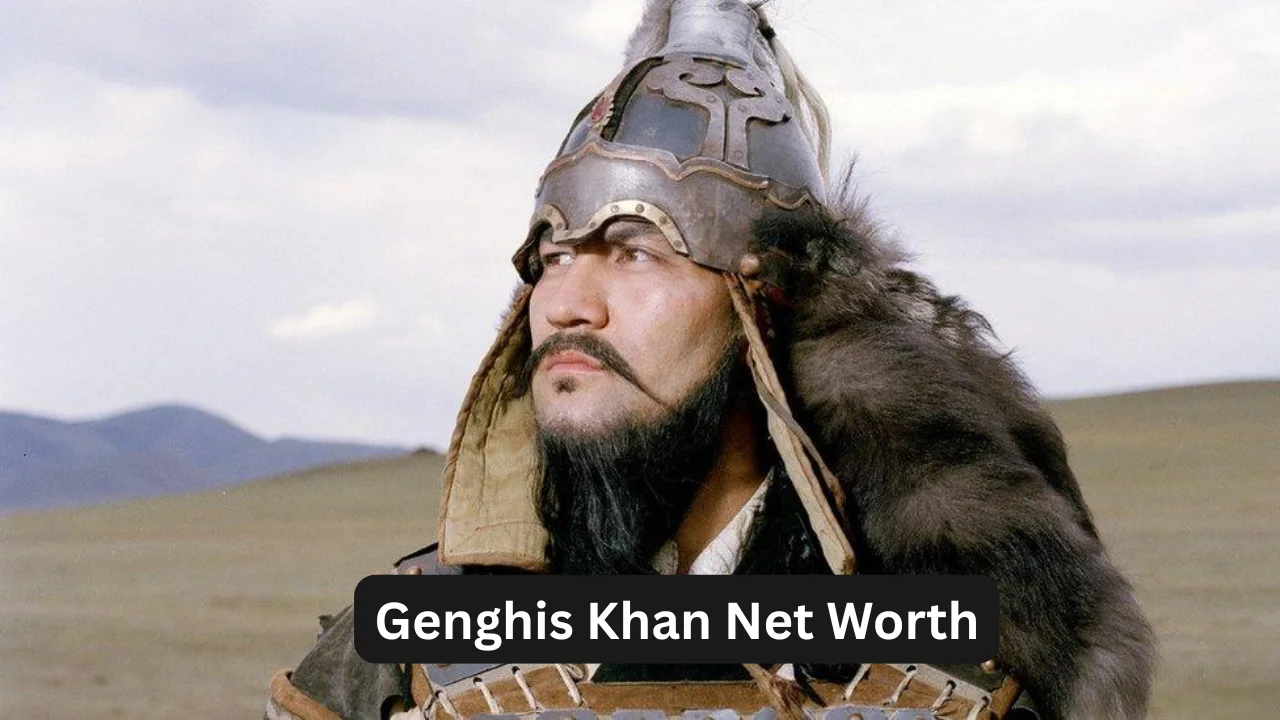
Genghis Khan was one of the most powerful rulers in world history, and his rise from a difficult childhood remains remarkable. Born as Temüjin around 1162, he united rival Mongol tribes and created the foundation of the Mongol Empire. His campaigns eventually produced the largest contiguous land empire in history, stretching across much of Asia and into Europe.
The topic of Genghis Khan net worth is unusual because medieval rulers did not keep personal financial records like modern billionaires. Some modern estimates place his wealth at about $120 trillion, while other estimates use $100 trillion. These figures should not be treated as confirmed personal wealth because they attempt to value imperial territory, resources and economic power.
Who Is Genghis Khan?
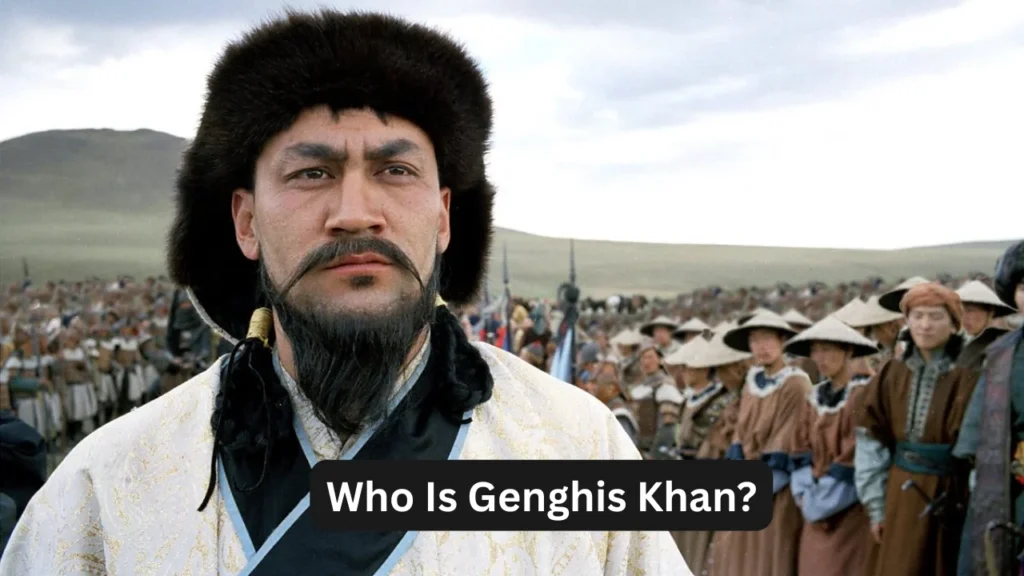
Genghis Khan was the founder and first Great Khan of the Mongol Empire. His birth name was Temüjin, and he received the title Genghis Khan after Mongol leaders recognized him as their supreme ruler in 1206. He built his power through alliances, military strategy, political reforms and the careful organization of Mongol society.
Unlike many rulers who depended mainly on family status, Temüjin promoted capable people and created military units that reduced the importance of traditional tribal divisions. He also introduced systems for administration, communication and taxation as his territory expanded. These decisions helped turn a collection of competing tribes into a powerful imperial state.
| Detail | Information |
| Full name | Temüjin |
| Known as | Genghis Khan or Chinggis Khan |
| Born | Around 1162 |
| Birth region | Mongolian steppe |
| Died | 1227 |
| Position | First Great Khan of the Mongol Empire |
| Reign | 1206 to 1227 |
| Father | Yesügei |
| Mother | Hö’elün |
| Principal wife | Börte |
| Clan | Borjigin |
| Major achievement | Founded and expanded the Mongol Empire |
Also Read: Sam Faiers Net Worth
How Did Genghis Khan Go Viral?
Genghis Khan did not become famous through social media, since he lived more than eight centuries ago. His original fame came from his military victories and his ability to unite tribes that had fought each other for generations. By 1206, he had defeated or absorbed his major rivals and gained control of the Mongolian steppe.
His reputation grew as Mongol armies moved into northern China and Central Asia. Later generations made his story even more famous through historical books, documentaries, films and discussions about his military achievements. Today, his name remains strongly connected with conquest, leadership, empire building and the debate surrounding historical wealth.
| Factor | Effect on His Fame |
| Tribal unification | Created a strong Mongol political force |
| Military victories | Established his reputation as a powerful commander |
| Mongol Empire | Became the largest contiguous empire in history |
| Political reforms | Strengthened his long-term influence |
| Trade routes | Connected distant regions of Eurasia |
| Historical records | Preserved his story for later generations |
| Modern media | Renewed public interest in his life and legacy |
What Is Genghis Khan Doing Now?
Genghis Khan is not alive today because he died in 1227 during the Mongol campaign against Western Xia. Historical sources disagree about the exact circumstances of his death, and several theories have appeared over the centuries. His burial place also remains unknown, which has added another layer of mystery to his story.
Because he died centuries before modern communication technology, he has no current job, business or personal income. His modern influence comes from his historical legacy rather than ongoing activity. Museums, historians, documentaries and cultural institutions continue to study his rule and its effect on Eurasian history.
| Current Detail | Information |
| Alive | No |
| Year of death | 1227 |
| Current occupation | None |
| Current residence | None |
| Burial place | Unknown |
| Modern relevance | Historical and cultural |
| Current income | None |
| Social media | No authentic personal accounts |
Also Read: Ray Winstone Net Worth
Where Did Genghis Khan Live?
Genghis Khan lived mainly as a nomadic ruler of the Mongolian steppe, rather than in a permanent palace like many later monarchs. His court moved with his armies, family, animals and followers. As Mongol power expanded, the empire developed administrative centers, with Karakorum later becoming its famous imperial capital under his successors.
His birthplace is traditionally associated with the Khentii region of modern Mongolia. He also spent significant periods campaigning across northern China and Central Asia. Since his burial location has never been confirmed, there is no verified modern site that can be called his final residence.
| Location | Historical Importance |
| Mongolian steppe | Main homeland and early power base |
| Khentii region | Traditionally linked with his birthplace |
| Northern China | Major area of military campaigns |
| Central Asia | Major region of Mongol expansion |
| Western Xia | Site of his final campaign |
| Karakorum | Later became the Mongol imperial center |
| Burial site | Unknown |
Genghis Khan Net Worth
The most widely repeated modern estimate for Genghis Khan net worth is approximately $120 trillion. Some sources use a lower figure of $100 trillion, but neither number represents a documented personal fortune. Current historical wealth research also warns that an emperor’s control over an empire cannot be measured in the same way as a modern person’s stocks, property or business holdings.
The important distinction is that this enormous number attempts to represent the economic scale of his imperial power. It does not mean that Genghis Khan personally kept $120 trillion in gold, cash or investments. For that reason, the figure should be described as a speculative modern-equivalent valuation, not a confirmed historical net worth.
| Net Worth Measure | Estimated Value |
| Common modern estimate | $120 trillion |
| Lower commonly cited estimate | $100 trillion |
| Verified personal net worth | Unknown |
| Documented cash holdings | Unknown |
| Documented private investments | None |
| Main basis of modern estimates | Empire, land, resources and tribute |
| Reliability of exact dollar figure | Very low |
Why Is His Net Worth Difficult to Calculate?
Modern net worth usually means the value of a person’s assets minus liabilities. Genghis Khan lived under a political system where imperial resources, military power, land and the ruler’s authority were closely connected. Historians therefore cannot create a reliable personal balance sheet for him in the same way they can estimate a modern billionaire’s fortune.
The $120 trillion figure mainly reflects the enormous scale of the territory and resources controlled by the Mongol Empire. It should not suggest that Genghis Khan personally kept that amount in gold, silver or cash. Treating the figure as an exact personal fortune would therefore create a misleading picture of medieval wealth.
| Modern Wealth Concept | Genghis Khan Comparison |
| Stocks | Not applicable |
| Bank accounts | No reliable records |
| Private companies | Not applicable |
| Real estate | Vast territorial control, not modern ownership |
| Tax revenue | Important imperial resource |
| Tribute | Major source of wealth and goods |
| War spoils | Important economic resource |
| Empire | Main basis for modern wealth estimates |
Also Read: John Lennon Net Worth
Financial Growth Timeline
There are no surviving financial statements that show Genghis Khan’s wealth increasing year by year. Instead, his economic growth can be understood through the expansion of his political authority and control over resources. His early life involved severe hardship, while his later campaigns gave him access to larger territories, populations, trade routes and tribute.
The timeline below therefore measures the growth of his economic and imperial power, rather than claiming exact personal net worth figures. This approach gives a more historically accurate view of how his resources increased during his rise.
| Period | Major Development | Economic Impact |
| Around 1162 | Birth of Temüjin | Born into a Mongol ruling family |
| Childhood | Father’s death and family hardship | Experienced major economic insecurity |
| Youth | Built alliances and followers | Developed an independent power base |
| 1180s to 1190s | Expanded his military following | Increased access to resources |
| 1203 to 1205 | Defeated major rivals | Gained control of more tribes |
| 1206 | Became Genghis Khan | Created unified Mongol authority |
| 1209 onward | Expanded into neighboring states | Increased tribute and resources |
| 1211 to 1215 | Campaigns against Jin China | Expanded territorial wealth |
| 1219 to 1221 | Conquered Khwarazmian territories | Extended economic reach into Central Asia |
| 1227 | Died during Western Xia campaign | Left a vast empire to his successors |
Key Earning Streams
Discussing Genghis Khan net worth through modern earning streams requires some caution because he did not earn money through salaries, companies or investments. His economic power came from conquest, tribute, taxation, livestock, trade and control over productive territories. Mongol leaders also distributed wealth and spoils among followers, which helped maintain military loyalty.
Trade became especially important as Mongol control expanded across Eurasia. By securing major routes and imposing political order over large areas, the Mongols helped merchants move goods and ideas across regions that had previously been separated by conflict. This wider economic system became an important part of the empire’s long-term influence.
| Wealth Source | How It Supported His Power |
| Conquest | Added territories and valuable resources |
| Tribute | Subject states provided goods and wealth |
| Taxation | Generated resources from conquered populations |
| Livestock | Horses and animals were central to Mongol life |
| Trade | Supported long-distance commercial activity |
| Silk Road | Connected major Eurasian markets |
| War spoils | Added gold, silver, goods and livestock |
| Land | Created enormous territorial economic power |
| Population | Provided labor, taxes and military resources |
| Trade protection | Encouraged merchants to travel across the empire |
Comparison With Historical Peers
Genghis Khan is often compared with Mansa Musa, Augustus Caesar, and Emperor Shenzong when researchers discuss the wealthiest rulers in history. These comparisons remain difficult because ancient rulers controlled state resources rather than personal investment portfolios. His commonly quoted wealth of $100 trillion to $120 trillion is therefore much more speculative than modern billionaire estimates.
| Historical Figure | Common Modern Estimate | Main Source of Wealth | Comparison |
| Genghis Khan | $100 trillion to $120 trillion | Mongol Empire and territorial control | Highly speculative |
| Mansa Musa | Around $400 billion | Gold, salt and trade | Historical estimate |
| Augustus Caesar | Trillions in some estimates | Roman imperial resources | State and personal wealth overlap |
| Emperor Shenzong | Trillions in some estimates | Song China’s economy | Empire-scale wealth |
| John D. Rockefeller | Hundreds of billions in modern value | Standard Oil | More measurable |
| Andrew Carnegie | Hundreds of billions in modern value | Carnegie Steel | More measurable |
Career Highlights
Genghis Khan’s career combined military leadership, political strategy and empire building. He began as Temüjin and gradually built a loyal following despite serious hardships during childhood. After defeating major rivals, he became Genghis Khan in 1206 and launched campaigns that dramatically expanded Mongol power across Eurasia.
His military system relied on speed, discipline, intelligence and organized cavalry units. He also used political alliances and administrative reforms to maintain control over newly conquered populations. These achievements made him one of the most influential military and political figures in world history.
| Year or Period | Career Highlight |
| Around 1162 | Born as Temüjin |
| Childhood | Survived family hardship and political instability |
| 1170s | Married Börte |
| 1180s to 1190s | Built alliances and a military following |
| 1206 | Proclaimed Genghis Khan |
| 1206 onward | Began major imperial expansion |
| 1211 to 1215 | Campaigns against Jin China |
| 1219 to 1221 | Conquered much of the Khwarazmian Empire |
| 1220s | Expanded Mongol influence across Central Asia |
| 1227 | Died during the Western Xia campaign |
Also Read: Pete Waterman Net Worth
Major Military Achievements
Genghis Khan developed a highly organized military that could move quickly across difficult terrain. He divided soldiers into units of tens, hundreds, thousands and larger formations, which helped commanders manage large armies. His forces also used reconnaissance, coordinated attacks and psychological warfare to defeat stronger opponents.
His campaigns changed the political map of Eurasia. Mongol armies conquered large parts of northern China and Central Asia during his lifetime, while his successors continued expansion after his death. His military methods remain widely studied because of their combination of mobility, organization and strategic planning.
| Military Achievement | Historical Importance |
| United Mongol tribes | Created a powerful unified army |
| Defeated rival leaders | Removed major internal threats |
| Conquered territories in northern China | Expanded Mongol economic and political power |
| Defeated Khwarazmian forces | Opened major Central Asian territories |
| Used mobile cavalry | Allowed rapid military campaigns |
| Applied reconnaissance | Improved battlefield planning |
| Integrated conquered people | Added skilled soldiers and administrators |
| Organized communication | Improved control across large territories |
Administrative and Political Achievements
Genghis Khan was more than a military commander because he also developed systems that helped govern a growing empire. His administration adopted useful practices from conquered societies and promoted capable individuals based on service and ability. He also supported communication networks that allowed information to travel across large distances.
His policies helped connect different ethnic groups, religions and cultures under Mongol authority. Religious tolerance became an important feature of Mongol rule, while trade protections helped merchants travel through large parts of Eurasia. These policies contributed to the empire’s economic and administrative strength.
| Reform or Policy | Importance |
| Merit-based appointments | Reduced reliance on tribal birth status |
| Writing system | Improved government administration |
| Census | Helped organize people and resources |
| Religious tolerance | Supported diverse religious communities |
| Diplomatic protection | Protected foreign envoys |
| Relay system | Improved long-distance communication |
| Military organization | Created a more efficient command structure |
| Trade protection | Supported commercial activity |
Philanthropy and Generosity
Genghis Khan was not a philanthropist in the modern sense. No modern charitable foundation or organized humanitarian program can be connected to him. However, redistribution of wealth played an important role in Mongol political culture, particularly when leaders distributed captured goods and rewards among warriors and commanders.
His policies also had broader economic effects. The Mongol Empire eventually created conditions that allowed merchants, travelers and scholars to move across large parts of Eurasia. This increased contact between different civilizations and helped move goods, technologies and ideas across long distances.
| Area | Contribution |
| Military rewards | Distributed spoils among followers |
| Political redistribution | Allocated resources to supporters |
| Religious tolerance | Allowed different faiths to operate |
| Trade | Supported movement across Eurasia |
| Communication | Created long-distance relay networks |
| Cultural exchange | Connected different civilizations |
Biography
Temüjin was born around 1162 into the Borjigin clan on the Mongolian steppe. His father, Yesügei, died while Temüjin was still young, leaving his family in a vulnerable position. His mother, Hö’elün, raised the children through difficult conditions, and these early experiences shaped Temüjin’s approach to survival, loyalty and leadership.
As a young man, Temüjin formed alliances and gathered followers while fighting rival tribes. His marriage to Börte became an important political relationship, and he later rescued her after she was captured by a rival group. By 1206, he had defeated or absorbed his major rivals and became the supreme Mongol leader.
After becoming Genghis Khan, he launched major campaigns into neighboring territories. His armies expanded toward China and Central Asia, creating an empire that continued to grow after his death. His sons and grandsons later expanded Mongol rule even farther across Eurasia.
| Biography Detail | Information |
| Birth name | Temüjin |
| Birth | Around 1162 |
| Father | Yesügei |
| Mother | Hö’elün |
| Clan | Borjigin |
| Principal wife | Börte |
| Became Great Khan | 1206 |
| Major role | Founder of the Mongol Empire |
| Death | 1227 |
| Legacy | One of history’s most influential rulers |
Age
Genghis Khan was born around 1162 and died in 1227. Based on those commonly accepted dates, he was approximately 65 years old when he died. Historians cannot establish his exact age with complete certainty because his precise birth date remains unknown.
| Detail | Information |
| Estimated birth year | Around 1162 |
| Death year | 1227 |
| Approximate age at death | 65 years |
| Exact birthday | Unknown |
Also Read: Marcus Rashford Net Worth
Height
There is no reliable historical record that gives Genghis Khan’s exact height. Ancient sources do not provide a verified measurement in feet, inches or centimeters. Therefore, websites that publish an exact height should be treated carefully because historians cannot confirm those numbers.
| Measurement | Information |
| Height | Unknown |
| Verified measurement | None |
| Exact height in centimeters | Not documented |
| Exact height in feet | Not documented |
| Online estimates | Unverified |
Family
Genghis Khan was born to Yesügei and Hö’elün, and he belonged to the Borjigin clan. His principal wife, Börte, became an important member of the early Mongol ruling family. She had four sons and five daughters with Genghis Khan, and these children became important figures in the Mongol dynasty.
Genghis Khan also had other wives and children. His descendants played a major role in expanding the Mongol Empire after his death. His son Ögedei eventually became Great Khan, while other descendants ruled different parts of the enormous empire.
| Family Member | Relationship |
| Yesügei | Father |
| Hö’elün | Mother |
| Börte | Principal wife |
| Jochi | Son |
| Chagatai | Son |
| Ögedei | Son and later Great Khan |
| Tolui | Son |
| Qojin | Daughter |
| Alaqa Bekhi | Daughter |
| Tümelün | Daughter |
| Altalun | Daughter |
| Checheikhen | Daughter |
Relationship and Marriage
Börte was Genghis Khan’s principal wife and one of the most important women in the early Mongol dynasty. Their relationship began through a childhood betrothal and marriage, and Börte remained closely connected to Temüjin during his difficult rise to power. Her position became especially important after Temüjin established himself as the Mongol leader.
Historical sources also describe Genghis Khan as having several other wives and concubines. However, Börte held a particularly important position because her sons became central figures in the ruling dynasty. Her family line continued through the Mongol Empire for generations.
| Relationship Detail | Information |
| Principal wife | Börte |
| Marriage | Began when Temüjin was young |
| Sons with Börte | Four |
| Daughters with Börte | Five |
| Other wives | Yes |
| Concubines | Historical sources record them |
| Most prominent wife | Börte |
Education
Genghis Khan did not attend a formal school in the modern sense. He grew up in a nomadic society where children learned practical skills through daily life, including riding horses, hunting, survival, diplomacy and warfare. These experiences became important parts of his development as a military leader.
Although historians generally consider Genghis Khan to have been unable to read and write himself, he understood the value of knowledge. His government used educated administrators and adopted a writing system to improve communication and record keeping throughout the growing empire.
| Education Area | Information |
| Formal schooling | None documented |
| Literacy | Generally considered illiterate |
| Military training | Practical experience |
| Horsemanship | Learned through nomadic life |
| Leadership | Developed through politics and warfare |
| Administration | Learned from conquered societies and advisers |
Religion
Genghis Khan grew up within the spiritual traditions of the Mongolian steppe, often associated with Tengrism. His empire later included followers of Islam, Christianity, Buddhism and other religions. He generally allowed different religious communities to practice their faith under Mongol rule.
Religious tolerance helped Genghis Khan govern populations with different beliefs and cultural traditions. This policy also helped create an environment where scholars, merchants and religious figures could travel across parts of the expanding empire.
| Religious Aspect | Information |
| Traditional belief | Tengrism and steppe spiritual traditions |
| Islam | Present within the empire |
| Christianity | Present within the empire |
| Buddhism | Present within the empire |
| Religious policy | Generally tolerant |
| Historical significance | Supported religious diversity |
Also Read: Pete Waterman Net Worth
Social Media Presence
Genghis Khan does not have any authentic social-media accounts because he died in 1227. Therefore, there is no official Instagram profile, Facebook page, X account, YouTube channel or TikTok profile operated by him. Modern accounts using his name are generally historical pages, fan accounts, educational channels or unrelated profiles.
This distinction matters when researching Genghis Khan online. A page that uses his name or image does not mean that it represents an official personal account, since he lived centuries before these platforms existed.
| Platform | Official Account |
| No | |
| No | |
| X | No |
| YouTube | No |
| TikTok | No |
| Reason | Historical figure who died in 1227 |
Genghis Khan’s Legacy
Genghis Khan left one of the most complicated legacies in world history. His conquests caused enormous destruction and loss of life, yet his empire also created connections between distant regions that had previously remained separated. Historians therefore study him both as a destructive conqueror and as an influential political and military organizer.
The Mongol Empire helped increase movement across Eurasia during later periods of Mongol rule. Merchants, diplomats, craftsmen and scholars could travel across large areas under Mongol control. His political system and military organization also influenced the development of several states that emerged from the empire.
| Legacy Area | Impact |
| Military history | Influenced the study of warfare and strategy |
| Political history | Created the foundation of the Mongol Empire |
| Trade | Strengthened Eurasian commercial links |
| Communication | Improved long-distance administration |
| Culture | Connected different civilizations |
| Religion | Supported religious diversity |
| Administration | Used systems from several conquered societies |
| Mongolia | Remains a major national historical figure |
Descendants and Genetic Legacy
Genghis Khan has become famous for claims about his enormous number of descendants. A widely discussed 2003 genetic study suggested that around 0.5% of the world’s male population may have carried a Y-chromosome lineage associated with a common male ancestor who lived around the time of Genghis Khan. However, later research has questioned whether this lineage can be directly attributed to Genghis Khan himself.
The uncertainty exists because researchers have never identified and genetically tested Genghis Khan’s remains. As a result, scientists cannot definitively prove that the famous genetic lineage belonged to him personally. The subject remains an interesting example of how historical genetics can produce major claims while still containing important limitations.
| Genetic Detail | Current Understanding |
| Famous estimate | About 0.5% of men potentially shared the lineage |
| Original evidence | Y-chromosome research |
| Direct DNA from Genghis Khan | Not available |
| Confirmed grave | Not identified |
| Later research | Questioned direct attribution |
| Final conclusion | Personal genetic link remains unproven |
Genghis Khan’s Death
Genghis Khan died in 1227 during his campaign against the Western Xia kingdom. Historians have proposed different explanations for his death, and no single theory has been proven beyond doubt. One commonly repeated account connects his death with injuries after falling from a horse.
His burial has also remained a historical mystery. According to tradition, his followers took steps to conceal the burial site, and no confirmed tomb has been discovered. This uncertainty continues to encourage archaeological searches and historical research.
| Death Detail | Information |
| Year | 1227 |
| Campaign | Western Xia |
| Approximate age | 65 |
| Cause of death | Uncertain |
| Horse-related injury theory | Commonly reported |
| Burial location | Unknown |
Genghis Khan’s Historical Wealth Compared With Modern Billionaires
The frequently quoted $120 trillion figure should not be compared directly with the wealth of modern billionaires. Modern billionaires usually hold measurable assets such as company shares, real estate and financial investments. Genghis Khan’s wealth estimates instead attempt to assign a modern monetary value to an enormous empire and its economic resources.
This difference explains why historical wealth rankings often produce very different results. The value associated with Genghis Khan represents political and economic control rather than a conventional personal fortune. Therefore, his figure should always be presented with a clear explanation about its speculative nature.
| Person | Wealth Estimate | Measurement Type |
| Genghis Khan | $100 trillion to $120 trillion | Highly speculative imperial valuation |
| Mansa Musa | Around $400 billion in some estimates | Historical wealth estimate |
| Rockefeller | Hundreds of billions in modern value | Historical financial estimate |
| Carnegie | Hundreds of billions in modern value | Historical financial estimate |
| Modern billionaires | Varies | Based on measurable assets |
Frequently Asked Questions
What was Genghis Khan’s net worth?
There is no verified personal net worth for Genghis Khan. Modern estimates commonly place his wealth at $100 trillion to $120 trillion, but these numbers represent speculative valuations of imperial resources.
Was Genghis Khan the richest person ever?
Some historical wealth lists describe Genghis Khan as one of the richest people ever. However, historians cannot reliably compare his imperial resources with modern personal fortunes.
How did Genghis Khan become wealthy?
He gained economic power through conquest, tribute, taxation, livestock, war spoils, trade routes and control over large territories and populations.
How old was Genghis Khan when he died?
Genghis Khan was approximately 65 years old when he died in 1227, based on the commonly accepted birth year of around 1162.
Who was Genghis Khan’s wife?
His principal wife was Börte, who played an important role in his family and political life and became the mother of several important Mongol heirs.
Does Genghis Khan have an Instagram account?
No. Genghis Khan died in 1227, so he has no authentic Instagram, Facebook, X, YouTube or TikTok account.
Where is Genghis Khan buried?
His exact burial site remains unknown. Despite historical and archaeological interest, researchers have never conclusively identified his tomb.
Did Genghis Khan receive formal education?
There is no evidence that he received formal schooling. He learned practical skills through nomadic life, warfare, politics and leadership.
Also Read: Ant McPartlin Net Worth
Conclusion
Genghis Khan remains one of history’s most influential rulers, but the popular Genghis Khan net worth figure requires careful explanation. Estimates of $100 trillion to $120 trillion reflect the enormous economic and territorial power of the Mongol Empire rather than a documented personal bank balance or investment portfolio.
His true historical importance goes far beyond wealth. From a difficult childhood, Temüjin developed into a powerful leader who united Mongol tribes, built an enormous empire and changed the political and economic history of Eurasia. His military methods, administrative decisions, family dynasty and controversial legacy continue to attract researchers and readers more than eight centuries after his death.

Emily Parker is a curious writer who enjoys turning complex ideas into easy, enjoyable reads. She covers everything from lifestyle and entertainment to business and technology, with a focus on sharing helpful insights and meaningful stories with readers.